Blog

  • Announcing TechnoTherapy

    Hi everyone,

    I have decided to focus my longer-form online efforts around a new org, TechnoTherapy.  The vision is to hold a space for the integration of mobile/web technology into the work of behavioral health professionals.  Please check out the site by clicking on the icon below.  Really excited about this new adventure!

    LogoColorTextBelow

    This site will continue to be an archive for longer-form personal reflections and sharing.  To connect directly, and for shorter-form shares, connect with me via FaceBookTwitter,  and LinkedIn.

    With love,
    Vikram

  • An Open Love Letter to America

    Why I #FeelTheBern

    A blog post of approximately 3500 words & 10 photos republished on the Daily Kos:
    http://www.dailykos.com/story/2016/02/11/1483171/-An-Open-Love-Letter-to-America-Why-I-FeelTheBern

    Also, a new coinage: NEROING (links to FaceBook)


  • Why Progressives Aren’t Winning Rural Voters

    A number of recent news bits like this post on Vox and this video, have pointed to the fact that the Democrats got 20 million more votes for Senate than Republicans in the 2014 midterm elections, yet are down in representation 46 to 54.  Though the number itself is a bit miselading, still there is a lot of hand-wringing and bemoaning it: “This proves our democracy is broken!” says Cenk Uygur.  I disagree.

    It’s not (just) the electoral system though yes this is a factor, by design. The system in America was framed by the Founders to privilege the rural; in Madison’s Federalist Papers—the Founding Fathers consciously chose country-states (where the capital is a relatively small town, and representation is at least half based purely on geography rather than population)—because they saw the long, terribly unstable history of city-states (where the capital is a big city, and representation is based largely on population or direct democracy).

    Now the real problem is that the Left (everywhere, not only the US)—just doesn’t ‘get it’ when it comes to country folk. Very broadly speaking, country people everywhere—I saw this even in India on my last visit—are terrified by modernity, and for good reason. It’s existential. Their access to the means of survival and advancement for city/suburban life—education, social connections, values of interdependence, multiculturalism, technology-driven communications—are all sharply less and it only seems the gap is getting wider. And what they do have for survival—land, basic survival skills, direct personal and social connection, biological & ecological intuition—assets that used to be the foundations of human survival—are being supplanted around them by agribusiness/mining/timber/energy megacorporations, and in the wider world by social media and mass media culture, and the hyperspecialization of labor in cities…  From my view, it’s a real loss for the human race, and for people who live from the land, or who are deeply connected to that culture, even if they don’t themselves live in it, it’s maddening.

    The part of the Left that should most connect to them—the Green movement—somehow deifies nature and the Earth, but not the actual people who live most connected to it daily, and has little clear strategy that empowers them either…

    I was just on a 10-day retreat where my roommate was a family farmer from rural Minnesota, with 20 some family members on a 2500 acre spread. Only grew GMO corn, soy, alfalfa and wheat. Asked him about if he considered going organic and he said, sure–but it was too hard/expensive/complicated for his family to undertake, and there wasn’t near enough help for it to seem like a sure bet. They’re just eking it out as it is. The Left just isn’t making the case for guys like him. And this was a pretty progressive Minnesota farmer—the kind who would do a 10-day Buddhist mindfulness retreat.

    In the absence of a cohesive strategy, everywhere the Right is cynically turning their fear and the economic pressures on them to its political advantage through the (not-so) veiled politics of race and lower-vs-middle-class. But the Left could easily win this—rural media is cheaper, and their desperation makes them ripe for transformation in a more cohesive direction that is united with the rest of the global economy, instead of  being pushed madly further to the edge. Around the world, the Left just hasn’t gone after country folk hard enough with a serious, workable set of alternatives, backed up by deep thinking, and new policy, programs and money that give them a real hope to be winners in the modern world.

    We need a real alternative to the fear the Right uses to win them over and we don’t really have it.
    ___
    Update January 15, 2016: The emergence of Trump and Bernie Sanders has come to illustrate my point in this post even more sharply.  Unfortunately, how socially progressive politics like Sanders has stood for the last 50 years has never been not enough to connect with the rural Trump supporters’ frustrations.  They see this as more taxpayer-funded charity for people other than them.  In addition to paying for college and healthcare, we need to talk about paying for the kinds of social innovation that will keep family farms up and running, and keep rural communities healthy and vibrant.  Beyond organic farming, we need to make the case for investment in financially and environmentally sustainable uses of the land — wind & solar farms, access to high-paying urban markets for specialty produce and the expertise to produce it, ecotourism, electric vehicles, 100% wireless broadband penetration, online education (even at pre-k-12), and the like.  The then-President-Elect Obama had in the Fall of 2008 a reasonably good start at a progressive Rural Agenda addressing all of these, but if we’re honest, follow-through hasn’t been very energized or particularly successful.  The frustrations and fears and failures in rural America are at least as much if not greater…

  • The Temple Closure

    The Temple Closure

    A fable poem.

    *   *   *   *   *

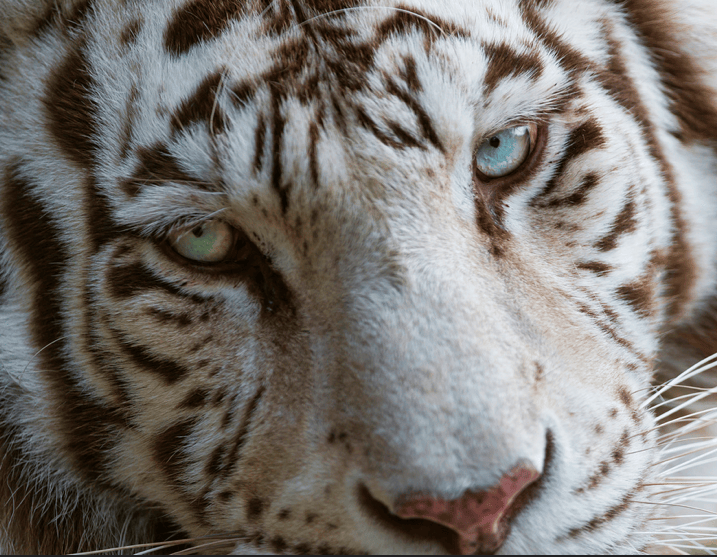
    Late last night, a nameless wild white tigress cub enters,
    madly gallops about smashing the statues.
    Awoken by the sounds, the head priest runs
    and prods her with but a stick and shouts,
    “Asaadhunaa asaadhunaa asaadhunaa!
    Shame shame shame!”
    The cub knows not his words nor his language,
    she hisses and growls, but our Vishal does not relent.
    She senses a power in him unlike the others,
    she did not yet know it was not his own,
    and it stops her rakshasi demonness rampage.
    She steals away into the night.

    Vishal inventories the damage:
    one by one by one by one by one,
    every statue in each sanctum shattered.
    He finds soft prayers rising in his heart
    to the Great Goddess Durga,
    imploring her—
    Let me not dream you forsake me,
    may you be with me always, always.
    Please o please, Mother of the Universe,
    you know the work of this temple
    is the one love that calls me,
    the one that I am called to give.
    I am not much for all else in this world.
    Through loving you, You have made
    my heart, my spirit, and the place at my side
    into sacred spaces—
    all now empty, waiting, for you to fill.
    So now would you please come.
    Please come please come please come…”
    Exhaustion collapses him into a fervent dreamless sleep.

    At dawn, Vishal convenes the temple’s Board
    in the temple’s courtyard under the cool morning sun,
    he imagines to share his plan to handle the repairs.
    Instead on hearing the story and seeing the wreckage,
    demands arise from their shock and despair—
    “Why bother, if this demon cub is still on the loose??” they say:
    Maybe the priest’s prodding and shouting were enough to keep her at bay.
    Maybe a tall wall must be built and an intrepid guard employed.
    Maybe the zoo sends their top tamer to give her the life of an imprisoned toy.
    Maybe the lancers are called in to hunt and finish her.
    Maybe her elders sensed mischief’s portent, led her away with them.
    Maybe the temple closes indefinitely.

    Maybe after she left, the cub goes under cover of night
    as she did each day before to her perch on the nearest hill.
    There, she intently eyes her now smashed temple:
    the day’s first light glancing through leaves,
    glistening the gopuram tower,
    now the priest locking the gates
    with a sign she cannot read: closed for repair.
    The freshly washed faithful with flowers coming
    and then going, crestfallen, darshanless,
    the redolent grief of the barefoot laborer
    wheelbarrowing the shattered statues away,
    the priests uncomfortably lounging on mats
    trying with no luck to sleep away this day,
    in the trees above, the monkeys cackling their agita
    seeing the kitchen shut with no food to steal,
    amidst an ever rising and falling din
    of chatter and shouting weighty with lament.

    Surya draws across the sky as this cub sits observing the temple.
    Sensing their shock, sadness, confusion, despair, anger,
    She dreams of her temple visitation,
    Unable to know what made her do it.
    At first, it was just play,
    then it became something much more—
    A fury, a rage, a demonstration, a vengeance.
    Sitting so still, watching the flow of the temple’s life broken,
    she senses the connectedness of it all.
    So different today than all the other days she perched here,
    something new stirs her chest and swells in her throat.
    A toxic feeling mix of Love and Death,
    her head hangs low, when she leaves her perch as the sun sets
    As she moves but slowly, a distinct, painful knowing —
    something very very foolish has been done…

    She nears the drinking hole,
    a tear wells in her big cub eye,
    She looks down through more tears,
    sees her own rakshasi demonness face looking back.
    Softening, one lone drop runs down her pink wet nose and falls,
    Shimmering hypnotic circular waves visible by moonlight.
    Lost in grief at her own misdeed,
    staring down into the black water,
    she does not see when above her,
    the Goddess of the Universe herself, Durga Ma,
    appears, solid as you or I, in the flesh,
    hovering on an enormous lotus bud.
    A long time has passed when the cub finally looks up,
    sees the vermillion and gold sari and Her ten terrific arms,
    startled, she crouches into a frozen stare of abject retreat,
    Her luminous light unlike anything she’s known.
    Durga Ma locks on her scared wide eyes,
    gazes at her as if drinking in the ocean.
    The tigress cub is thirsty for this water,
    fear melts, replaced by a warm golden light
    centered between her eyes.

    Gently, Durga Ma begins a song celestial,
    “My daughter, knowing now what you have done,
    your throat quivers, heart breaks, shame dries your senses.
    Now you need fear and worry and hurt no more,
    for I grant you release of all that has passed.
    For it is I who have made you
    into a fierce, brokenhearted cub,
    to make you worthy to stride aloft
    as we smash the legions of demon kings.
    Rise now, rise, for my tigress shall be You.”

    She knows Durga Ma’s words already.
    She had heard them before in a future life.
    As Ma sings, the light in her grows to her entire length
    a peace she never knew comes into to her.
    Her heart softens, her throat opens, her aliveness returns.
    For a moment, the cub prances jubilant circles chasing her own tail.

    As Ma’s verse ends, a pregnant still enters the air,
    Ma’s gaze steady on the cub,
    the cub’s gaze steady on Her,
    Ma calls, “Sravi, come to me!”
    And Sravi moves, sensing herself
    under a power no longer her own,
    she bows her head gently at Ma’s feet.
    Gliding off Her lotus, Durga Ma goes to her and mounts
    Sravi, balanced perfectly with both legs to her side—
    Sravi rises, and in this moment knows,
    She is a tigress, no more a cub.

    Together they fly to the village as all sleep,
    stopping first at the laborers’ hut,
    into Ma’s sari, in a swift magical motion,
    the Goddess silk holds every shard of broken statue
    carted away in the barrow,
    on to the temple they ride.
    Making a silent approach by moonlight,
    in the distance the head priest sleeps across the entrance,
    so valiant to guard the temple with his life,
    clutching to his chest a heavy long curved club,
    ready with a far stronger prod than the night prior.
    Sensing their coming, he awakens,
    seeing at first only the tigress as she comes close,
    he lunges at her with his club,
    and she darts just out of his reach.
    Just then his eyes catch a curious light above him,
    and She appears.

    Falling to his knees before Her in awe,
    all anger fear and sorrow leave him, perhaps forever.
    She gazes back, unfurls Her sari.
    The broken statues,
    now all but one miraculously perfect,
    hover in the air.
    She gestures him to inspect the statues
    each now coated in gold—save one.
    Dazzled he stands slowly and walks to that one black idol,
    tenderly lifts his club, placing it in the center of the statue’s face—
    a bright light now coats that too gold.
    He begins whispering inwardly
    Om gam ganapataye namaha
    Om gam ganapataye namaha
    Om gam ganapataye namaha

    As his now golden Ganesha
    glides through the air to his sanctum.

    Then each remaining golden statue flies under Durga Ma’s power
    one by one by one by one by one
    to their thrones.
    And when the last one sits,
    Sravi slowly draws near Vishal,
    looking up at him with her now soft tigress gaze
    for a long moment, wordlessly,
    I’m sorry, I knew not what I did,
    I am no longer the nameless, mad, empty one
    who smashed all this.
    Durga Ma has saved me.
    I am Sravi, her mount.
    And we have come to restore you.

    Vishal hears her unspoken truth,
    cannot help but forgive.
    She comes to his side,
    he gently strokes her with affection.
    And begins to cry in silent joy at this great boon,
    this miracle, the statues restored,
    the demon cub transformed,
    his beloved Goddess in this very temple.
    Durga Ma floats down
    and embraces him from just above.
    She whispers,
    My beloved Son, my beloved Son, my beloved Son…

    When an infinite moment of Divine Love passes,
    Vishal looks up at Durga Ma,
    and nods his head once to the side and back
    with a slight smile and new twinkle in his eye—
    I am healed, whole, complete.
    He rises from his embrace
    and lies before her in pranam.
    Forehead down on the cool stone,
    outstretched hands together in prayer,
    He asks Her
    O Mother,
    please heal all the beings of this world,
    as you have restored me,
    may we all be.
    as you have restored me,
    may we all be.
    as you have restored me,
    may we all be.

    Lost in mantra, he does not see
    as Durga Ma again mounts Sravi
    they stride together to the bright empty space
    at the temple’s epicenter.
    Vishal’s eyes open when a bright golden light
    presses on lids of eyes closed in prayer.
    Light bathes Durga and Sravi ever brighter.
    He must look away it is so bright.

    When the darkness returns, He looks back,
    and there is astonishment:
    a glorious new golden statue sits of Durga Ma,
    as She just was in the flesh,
    yet now sitting only upon a delicate golden lotus leaf,
    She has finally come to stay,
    Love and Mischief sparkle her eyes.
    Vishal beholds her with disbelief,
    falls to his knees before Her.
    After a long moment of drinking in Her loving darshan gaze,
    he realizes, Sravi is not with Her,
    where has she gone?
    Where? Where? Where?

    Alarmed, he looks all through the temple,
    and cries out into the dark,
    but she is not to be seen.
    Maybe she was not meant to stay
    and went back living in the wild.
    Maybe this is all a long hot dream and I will wake up.
    Maybe this is all too much.
    At the temple gate, he sits to cry.
    Tears of grief and joy at once gather and don’t spill out.

    Then a soft nuzzling at his ear,
    Sravi rests her tigress head in his lap—
    the one to be in the sacred space by his side has come.
    Vishal is content, complete as he looks down at her cat eyes,
    when a blinding light comes between them.
    then dissipates as quickly as it came,
    Sravi has become the fairest bride he ever saw,
    blue eyes and long chestnut brown trusses,
    an elegant woman’s body,
    filled with all the grace and power of a tigress.
    A tigress no more—
    he draws her to him.
    Their bond seals with an eternal embrace.

    The Board takes a vote:
    A grand festival is arranged.
    All are fed, given silks, and a raucous troupe
    brings an all-night temple musical theatre,
    a great wedding is celebrated,
    before Durga Ma.
    All are delighted..

    Vishal and Sravi
    live out their many years
    in a simple, clean, inviting home
    built for them adjoining the temple,
    and traveling through the all the lands,
    taking in the lonesome elderly
    and the sick and lost children,
    spreading solace and delight to all they touch,
    holding all with the divine tenderness
    with which Durga Ma embraced them,
    inspiring countless homes and ashrams and orphanages,
    and living out a long extraordinary life together—
    celebrated each year
    with a grand festival featuring
    an elaborate drama and musical play,
    the priests stealing away all the statues of the temple,
    from their altars for one night,
    coated in black ash,
    taken out of the temple on a grim procession,
    during which all gathered follow, wailing laments,
    then arriving back in the temple courtyard,
    great heartfelt prayers to Durga Ma,
    and statues  are made to reappear,
    and in the midst of blinding fireworks,
    water run over them to reveal their golden forms,
    each lovingly reinstalled in their abode,
    then all the weddings in the land are consecrated,
    and a feast and dance and racous music,
    and a resplendent dramatic recounting
    of this very tale, lasting until dawn:
    Vishal and Sravi revered forever after
    as the long-lived guardians
    of the forest temple of the great golden Durga,
    he Her priest householder
    she Her tigress maiden.

    *   *   *   *   *

    The End.

    *   *   *   *   *

    Audio:

    • Live recording (12 min, 4.4MB MP3) of reading at the NAPAWF Open Mic at the Potter’s House, Washington, DC. May 29, 2015.  

  • On the YogaGlo video patent

    So there was a recently a spurious patent issued for shooting video of a yoga asana class from a particular angle.  From my view, this is the inevitable result of “yoga” not being about … well, yoga. Fortunately, there can never be a patent on the inner state of awakening that makes one lead a life of love and service, whether it is go feed the hungry, console the suffering, take joy in the good of others, help awaken the spirit of the downtrodden, or humbly serve in whatever ways one can. In my experience, many yoga teachers in America get this, and lead very simple lives for the privilege of teaching or otherwise serving full-time. However, many studio owners and corporations like YogaGlo are perpetuating the concept of the yoga “industry” — and it reveals deep ignorance of the yama of aparigraha — non-grasping, non-covetousness, non-possessiveness (aka generosity). For some reason, of all the yamas and niyamas, this one is the most freely dispensed with in the West.

    We cannot imagine it is yogic to have a lifestyle based in hurting others, lying, stealing, or lusting, but — yet this one, we hold on to. Of course we have to look out for number one! People won’t take us seriously if we don’t charge something! Americans don’t ‘get’ the culture of generosity — as a studio owner, what can I do? I have to survive??

    From the start, having a fixed price of entry for a yoga class begins a slippery slope — while not ill-intentioned — it can create a profound violation of this principle of aparigraha. Many of those who most need to experience mindfulness of their bodies — victims of childhood abuse, the trauma of war, homelessness and extreme poverty — see yoga culture as utterly inaccessible to because of the prevalence of fee-based yoga. I view all such classes as physical exercise classes which incorporate, selectively, and perhaps unwittingly self-servingly, only those elements of yoga culture which are convenient to the class of people who can afford them — and leave out the rest.

    This type of public legal battle over specious “intellectual property” claims is a natural consequence of ignoring this principle of aparigraha. Yoga need not be for wealthy studio owners to pay their extra jumbo mortgage or children’s private school tuitions — perhaps this may be a happy consequence after many years of dedicated service — but from the start, the purpose of yoga is to give away a kind of freedom, which if you experience, you could never imagine charging for the privilege of sharing, or ever suggesting you might deny anyone access to on the basis of money. Denying people the right to take a “money shot” angle of a yoga class is not so different.

    Until one personally experiences this freedom, the natural tendency is to seek control instead, which are what the fees, the “industry” and the patents are about at their base. As a community, it is time we moved away from all this needless grasping. It’s just getting in the way of our own freedom. There is beginning to be a movement for completely donation-based studios — LA has 4 at last count. This is yoga. I believe in it and I stand for it. Yoga is actually possible, here in America. And not just possible, but inevitable.

    Addenda: A little while after this was written, in October 2014, YogaGlo Inc elected to relinquish all claim on this patent.  I continue to stand by the inevitability of yoga.

  • SEPTEMBER Somatic Experiencing Mnemonic

    A memory aid for rapid application of Somatic Experiencing technique for PTSD discharge.

    Numbered text below taken verbatim from p. 75-76 of Dr. Peter Levine’s
    In An Unspoken Voice: How the Body Releases Trauma and Restores Goodness.
    I strongly recommend purchasing and reading the book, and working personally with an experienced practitioner before attempting to apply this mnemonic in a self-directed way.

    S – Safety: 1. Establish an environment of relative safety.
    E – Exploration: 2. Support initial exploration and acceptance of sensation.
    P – Pendulation: 3. Establish pendulation and containment: the innate power of rhythm.
    T – Titration: 4. Use titration to create increasing stability, resilience and organization. Titration is about carefully touching the smallest ‘drop’ of survival-based arousal, and other difficult sensations, to prevent retraumatization.
    E – Empowerment: 5. Provide a corrective experience by supplanting the passive responsees of collapse and helplessness with active, empowered, defensive responses.
    M – Mobilization: 6. Separate or ‘uncouple’ the conditioned association of fear and helplessness from the (normally time-limited but now maladaptive) biological immobility response.
    B – Breakthrough: 7. Resolve hyperarousal states by gently guiding the ‘discharge’ and redistribution of the vast survival energy mobilized for life-preserving action while freeing that energy to support higher-level brain functioning.
    E – Equilibration: 8. Engage in self-regulation to restore ‘dynamic equilibrium’ and relaxed alertness.
    R – Re-connection: 9. Orient to the here and now, contact the environment and reestablish the capacity for social engagement.

    Using the SEPTEMBER mnemonic to personally apply the Somatic Experiencing technique has been instrumental for me in safely working with and discharging traumatic charges.

    __
    SEPTEMBER mnemonic text & this page is copyleft Vikram Surya Chiruvolu, 2012. 

  • What’s the Harm in Teaching Men to be Tough?

    In sociologist Brené Brown’s TED talk on vulnerability and shame, she relates the story of a man who comes up to her at a book signing and asks why she doesn’t write about men.  She just doesn’t, she says.  He retorts, that’s convenient, leaving Brown a bit flummoxed.  But then, in a moment of deep vulnerability, the man goes on to say that his wife and three daughters, whose books Brown just signed, would “rather me die on top of my white horse than watch me fall down.”

    It’s a moving scene, and Brown uses it to illustrate her point is that it’s not just male teachers, coaches, mentors, brothers, fathers who teach men to be emotionally invulnerable—it’s the women in their lives.

    My personal experience with this is varied, but it largely holds true.  Though I didn’t lose anyone close in 9/11, something about the nation’s shared trauma and outpouring of grief, by both men and women, loosened something in me—gave me permission to feel my own difficulties more honestly.  That winter of 2001, at age 24, I found myself at a point in my life where I could admit to being lost and confused in my life, depressed, and deeply unsure of myself—so deeply that, for the first time in my life, I was actually willing to seek help.  At the time, the women in my life did not support me to do so; instead, perhaps like the man’s wife and daughters, they gave me the message that I was fine.  Just straighten up and fly right was the message I got—be more positive and success-minded.

    Thankfully, I took a stand for myself, and I did get the help I needed, and it became the beginning for me of a long journey toward a version of masculinity that incorporates vulnerability—the ability to admit failure, doubt, confusion, flaws, and harms I had a part in, and to have a rich, honest emotional life that allows me to feel grief and loss as well as empathy and connection with others.  All this has led to real, durable  happiness and a sense of inspired purpose.  Today, I think of this vulnerability as a deep gift that opens me to life in a way I never was before, and it also is the key to being deeply authentic in an empowered way—and this is my greatest strength.  The vitality in my body, the love in my heart, the steadiness in my voice, the clarity in my thinking—none of these would be available without this empowered authenticity, and this authenticity is just not possible without vulnerability.

    Looking back now, the women in my life support this happier, stronger version of me completely, but as it was developing, it wasn’t so easy.  I can’t say if the female projection of invulnerability onto men is a universal experience, but I do know from all my conversations with men over the years, that this pattern is very common—perhaps much more common than the women supporting men in vulnerability.  As Brown mentions, it is the rare woman who is free enough of her perceived need for the men in her life to project status and success that she will just meet male vulnerability with openness, support, and simple care.  Instead, these qualities may be there, but are often mixed with fear, avoidance, and denial.

    For a man, it can be existentially difficult, as in life-or-death-scary, to break through the expectation to have thick skin and never show weakness, especially when the close women in his life do not support that possibility.   But, it’s also clear to me that this is a vicious cycle in our broader society—as Brown points out from James Mihalik’s research—men are normed to project emotional control, pursue status, put work first, and project the capacity for violence.

    A vulnerable, authentic, empowered masculinity that incorporates and transcends these norms toward higher ideals of emotional balance, genuine usefulness to those in need, and non-violence requires many men to break free of the programming that the women in their lives might initially prefer.

    The stakes are high.  Globally, most of our large social institutions are still run by men, and the culture of male invulnerability runs so deep that even when women are in positions of power, they often feel they must conform to it, or else be cast aside.  Invulnerability leading to inauthenticity has real consequences—every major improvement in the direction of world institutions, whether medicine, banking, transportation, politics, food & agriculture, environment, any area of human endeavor—requires the individuals leading institutions to be strong enough to admit things are off course, to own the part they themselves and their institutions have played in things being off course, and to chart a new direction.

    So it’s my hope that we all find our way to an empowered authenticity, for our personal happiness and for the greater good.  It’s my hope that the traditional gender roles men and women have played, can continue to evolve forward into a more mutually supportive space—where men support women in finding their strength and their public voice, and women support men in finding their vulnerability and their inner truth.

    Published September 23, 2014 on now-defunct blog, the He-Said-She-Said Forum.

  • Ancient, Alternative, Emerging Science and Medicine

    In a recent discussion with an attorney about the US FDA and the current state of science and medicine, he shared this joke to summarize his view:

    Comedian Tim Minchin sums this up best when he says,
    “By definition, Alternative Medicine has either not been proved to work, or been proved not to work. You know what they call alternative medicine that’s been proved to work?
    Medicine.”

    He went to stake out the claim that a number of views of alternative medical community are anti-science.

    My response to him is as follows:

    In this description of what is Alternative vs (purportedly) Authentic Medicine, and the statement that [a particular alternative health news website] has many claims that are “anti-science” — I would just offer this response as a philosopher of science:

    The “Science” and “Medicine” you are speaking of is actually the culture of empiricism that derived from Aristotle, but has mostly evolved in the West from the 1700s until the late 1900s… These are far from the only science and medicine the world has known, but unfortunately, empiricism leads these fields to take on a rather closed form where progress derived from existing theories is steady, but fundamental innovation is very hard.

    And any honest scientist will tell you that while most of our specific results are verifiable, there are huge gaps in our essential understanding that require fundamental innovation, whether in physics or neurobiology. Any honest medical professional who has thought deeply on it will freely admit, we actually have no positive theory of health, and that our current models of development, metabolism, nutrition, and wellness are disjoint and woefully incomplete.

    However, there are both older medical systems from the east (Ayurveda and Chinese Traditional Medicine) as well as an emerging new science at the intersection of theoretical/quantum physics, genomics, systems biology and information theory — which point us toward a larger context than we can yet fully empirically, reproducibly test, but which is nonetheless are very observable and which offer applicable approaches and insights worth exploring, applying and testing.

    These translate into a new holistic science of energetic health and medicine, which have at their core a deep regard for the profound interconnectedness and intelligence embedded within each of our individual molecules, cellular organelles, tissues, organs and bodies, seeing them each in themselves as a unique society or ecosystem, as well as occupying a unique place in our larger human society and global ecosystem.

    These ideas are paving the way to a new vision of personal health and medicine, one that is also meaningfully integrated with a healthy vision for our world society and environment — and this change has already been afoot since the 1980s or so, and will become mainstream “Science and Medicine” in perhaps 20 to 40 years.

    So to put things quite as patly in tearing down “Alternative Medicine” and “anti-science” — well, yes, that may stand up in a court of law today, but it misses one of the most important and exciting changes in the history of humanity in how we think about ourselves, our relationship to each other, to our truth, and to our planet.

    While there will be many wrong turns in this process, the basic intent — to establish a broader, more integrated and holistic perspective on what we really are and how we really work best — is a good one — and shouldn’t be dismissed as quackery just because some of claims that come of it are the inevitable wrong turns, or, even worse, just haven’t yet been empirically, reproducibly demonstrated … That’s closed-minded and unfair, and hinders the process of fundamental change needed in our theories of science and medicine. Just because this new science’s practice and application aren’t yet perfected enough to be defensible in a court of law doesn’t mean anyone, including lawyers, should be closed-minded about it.

  • Being Vegan

    A friend posted  to my Facebook wall this recent NPR article entitled “Do Vegetarians and Vegans Think They’re Better Than Everyone Else?” Despite its cheeky tone, the question seriously got me thinking about the community of vegans — do we think we’re better?

    I had to admit my initial gut answer is that yes, a lot of vegans do, maybe even me.  And not in an entirely wholesome way. So I wanted to explore it because, clearly, it’s a potential sign of arrogance and ignorance to think such a thing.  

    To start, I think President Bill Clinton does a great job of talking about why he went vegan in this two minute video. 

    Getting deeper into this, I’ll start where Jonathan Safran Foer’s book Eating Animals picks up this topic.  In his first chapter, he discusses his grandma’s Chicken Carrot Soup, and the legendary status it had within his family. On the way to sharing the story of how this came to be, he beautifully draws out how we have a very delicate, complex psychology around our relationship to food that runs through our relationships with family, friends animals, and the planet — and weaves its way into our most basic daily choices, like “what’s for breakfast — fruit and granola, or bacon and eggs?” Deep emotional attachment and in some cases, addiction, are a big part of that psychology for most people.

    So it can really impact people on a deep level to hear about why anyone chooses to be vegan, and why I deeply hope others make similar choices in ever-larger numbers if they feel it’s right for them.  Fair notice. 

    Now my simple answer to the article’s question is — obviously, I think it’s better not to take any creature’s life needlessly. I don’t think we should cut down forests any more than we should slaughter birds, fish or cattle. It’s holistically not great — for our planet, our health, our karma, our relationship to each other, and to all the dead, and those who live on. 

    Veganism is a modern take on the spirit of the commandment, “Thou shalt not kill.” That spirit is non-violence. Love. Through veganism, among other practices, I strive to live out my belief in Love. 

    Morally, I believe slaughtering animals is wrong, and feel toward it just the same as I feel about slavery and racism. Taking life needlessly, for pleasure, and without a reverent regard for the web of life of which that life plays an integral part — that, to me, is deeply ignorant and dark-hearted.  To refrain whenever possible, in the spirit of the Biblical injunction “Thou Shalt Not Kill” and the Buddha’s admonition to first practice ahimsa (non-violence) above all else is a real virtue.  Yogic philosophy and Gandhi, and much of Eastern philosophy, focuses on ahimsa as the foundation of a more deeply alive, meaningful life.

    However, despite mention of religious injunctions — I want to affirm that I am really not ideological or fanatical about this. I appreciate the spirit, but realize, in practice there are lots of situations it may be necessary or good to eat meat.  For example, I don’t fault an indigenous tribesman living in a desert or tundra where agriculture and money are unavailable to kill an animal and feed it to his family. This is clearly part of our human heritage; it’s just that we don’t need it now, in our global economy with so many alternatives available.  Ethics are complex, but I believe when you can choose better practically, and are informed and awake in spirit enough to do so — then we are living up to our human potential for creative, inspired, positive action.

    I have entertained the idea, and know some who cling to it tightly — that “meat is murder.” This is the extreme ethical vegetarian’s view.   But I believe to hold this view is deeply hurtful to the holder, as well as to those people who are judged, and ultimately to the animals who meat-eaters go on eating for lack of a sensitive, nuanced and fair conversation about the ethics and practicality of their choices.  

    It’s just not quite accurate to say meat is murder — and by extension that most meat-eaters are murderers.  But there does need to be a clear-eyed acceptance that we all do participate in a deadly system — and most of us are complicit, even if not directly responsible.

    The nature of that deadly system has a name — just like slavery had a system, called racism, which we are still recovering from 150 years later. In the case of animal killing, it’s called carnism. And it’s the ideology that consuming animal flesh for pleasure is perfectly justified, in some cases — “the psychological disconnect which allows people to eat some animals while remaining resolutely sentimental about others.” 

    It was written about recently on the NY Times website here:
    http://schott.blogs.nytimes.com/2010/01/11/carnism/

    Why DO we love dogs, wear cows, and eat pigs?? Carnism is why — it’s a complex, contradictory ideology that deserves close exploration by any person who wishes to deepen their practice of compassion. Many books could be and will be written about it — the spiritual, economic, psychological, political, scientific, nutritional dimensions each have their own nuances that deserve to be addressed. But this is a blog post, not a book.

    So I’ll try to wrap it up by saying, I believe we are with veganism where the anti-slavery movement was about 200 years ago, in the 1810s. There is an impending global ecological, food, and water supply crisis, driven in large part by industrial-scale meat production and consumption and related depletion of forests and food/water supplies required for meat, which otherwise would feed humans.  

    Confronting this globally will force some deep reckoning, and may possibly even precipitate war, akin to the Civil War, but on a global scale. I am not the only one who believes this. Climate change scientists at the UN do as well:
    http://www.onegreenplanet.org/news/will-we-all-be-forced-to-be-vegetarian-by-2050/ 

    I would rather we avoid this fate, and feel it’s responsible and forward-thinking to try to work to avert it.  And I hope, through compassion and honesty, that we each make personal choices to effect a transformation without further bloodshed, of any kind. In the current world, I don’t believe eating animals is good, for anyone. We have nutritious plant-based alternatives and supplements that can meet everyone’s needs. 

    Finally — I know it makes me a better person than I was before to choose to care about all this, and to make the choices I do — each day, I literally feel better, more serene, more integrated, more connected to nature and all of life, more happy, more healthy, more able to be of service to others. It’s up to you to decide whether you might feel like a better person to do likewise, and to try it for yourself. 

    So — to answer in all seriousness the question the NPR article somewhat cheekily poses — my answer is: look, I do think it’s useful to meditate on this deeply.  For me,  I really feel there’s no consistent framework in which I can assert I’m better than anyone else.  But — what I do feel sure of is that I’m better than I was.  

    And, just like anyone with the experience of positive change in any area, I hope others who need or want it, have all the support they can to find it.
  • Evolving into Love through Self and Non-Self

    A persistent topic among my Insight Meditation circle of friends is that of anatta — non-self.  

    On this theme, a quote from Tricycle’s Daily Dharma was recently shared:

    The Limited Mask of Self
    Of all the words we use to disguise the hollowness of the human condition, none is more influential than ‘myself.’ It consists of a collage of still images—name, gender, nationality, profession, enthusiasms, relationships—that are renovated from time to time, but otherwise are each a relic from one particular experience or another. The defining teaching of the Buddhist tradition, that of non-self, is merely pointing out the limitations of this reflexive view we hold of ourselves. It’s not that the self does not exist, but that it is as cobbled-together and transient as everything else. — Andrew Olendzki, Self as Verb

    I decided to write about it here because anatta is an especially useful meditation topic for me right now, as I’ve been deeply challenged by the passing of my niece earlier this year to have some clarity on whether I believe in a soul that persists across lifetimes, and how this relates to karma and rebirth.  

    A super-natural (ie, more than simply biological/physical) notion of a Universal Self (atman) and a personal soul (jiva) is deeply wound into Hindu philosophy, and into Tantric buddhist traditions — in which a soul enters a body at birth (or perhaps conception) and leaves a body at death, and this soul has a “self”, an identity in some sense, that is subject to karma, rebirth and liberation.

    When family asked me what I thought of all this, and how it relates to my niece’s soul’s journey — I realized this is an aspect of spiritual life with which, while I have read and heard the teachings of great masters and practiced my family’s traditional faith to some degree — I really have had no direct experience per se, and I felt nothing much of substance to offer …  

    But it’s right and good to ask such questions, if at least to honor the departed, and perhaps even  to come to good answers for oneself on the journey. I had to do this once before, when my father passed.  As his eldest son, I performed the funeral rites and good works in his name in careful accordance with Vedic injunctions, which are said to aid in the freeing of his soul to depart this world peacefully, and to join the abode of our family’s ancestral souls.  Doing so helped heal me, and my family, and in some sense that was his unfinished karma with us.  In the process, I developed a loving, living memory of my father that is with me still.  However, in the process, I did not feel I came to know in any ultimate sense whether he had a soul, and if so, whether it went to the abode of the ancestors or the abode of Vishnu, or what have you.  The rites helped us, the living, make our peace; this was reason enough to do them.    

    I’m trying to find answers again, anew, and I see that over the years since my father passed, I’ve come to believe not in a personal soul per se, but that there are streams of karma embedded in one another, complex interleaving patterns of life and existence that repeat and evolve over time, and that these are reflected in, and in some sense, carried forward by physical reality — the complex patterns in DNA, in cells and organs, in language, in culture, in the environment — that what philosopher Ken Weber calls holons (levels of reality which are at once whole unto themselves in one sense, but also inextricably part of a larger order of existence) do exist, and that these do have some literal continuity in between their phases of arising and passing, are embedded in physical reality that assert themselves over over lifetimes and aeons, that these, in much the sense Darwin suggested for species, do evolve.  And this evolution occurs at every level of reality, that it can be an interpretive frame for the entirety of nature.

    So perhaps in some sense it can be meaningfully said these levels each have a ‘soul’ or a ‘self’ that is the encoding in the physical reality from which they arise, and in which they operate, of how they come to be just so …   But I’ve also come to believe that it’s a somewhat arbitrary or perhaps simply an aesthetic choice to believe this, as opposed to non-self; that these are all impersonal streams, that there is no special particularity and persistent identity to any one of them….

    The wikipedia entry on anatta (non-self) mentions how it’s commonly subject to the fallacy of reification — unskillfully asserting that an idea is more concrete than it is intended to be.  For me, being aware of this fallacy is the key in applying the anatta teaching — not forcing it to be more concrete than is really useful or observably true.  And anatta is highly abstract; it takes aim at the very subject-object frame underlying in our usual process of abstraction. Just like dukkha (suffering) and anicca (impermanence), anatta is a powerful insight to achieve liberation from the usual conditions of our thinking & existing… Pick up the tool when useful; set down when not.

    It wouldn’t be useful to focus so morbidly on suffering or impermanence that one loses the ability to undertake daily activities of living.  At times, I have been capable of a degree of such existential darkness.  Not helpful or skillful.  A bit wiser now, I carefully try to avoid this.   Likewise with anatta.  There is a self needed to eat, sleep, go to the bathroom, pay the bills, and also grieve loss, feel joy, serve others, give care, and meditate, contemplate, etc.  Refuting the existence of the self on this level in the name of anatta is not the point of the Buddha’s teaching.  As the saying goes — before enlightenment, fetching water, chopping wood; after enlightenment, fetching water, chopping wood…
    The point for me is to get free of my clinging to this frame of subjectivity (aka “self”), that comes with all sorts of fears and limiting beliefs about what I can do, what I need, who I should associate with, why I’m here.  To see my idea of “me” as “cobbled-together and transient” is to open to the power inherent in the meditative and contemplative process — to get a glimpse of the long-suffering, impermanent, groundless being that is “me” — so I can have the choice to do something useful with it, and not be compelled by this “me” to react, to cling, to avoid, to suffer. 

    I can direct this “me” to serve to free all beings, in the spirit of the bodhisatva vow.  Or at least, freely choose my karmic output — to react, to cling, to avoid, or whatever, if that’s what is most useful to do.  Or, to choose to believe I am part of a larger Self, that is Love.

    Various Buddhist teachers use the construction ‘selfing’ from time to time.  “Oh there I go, selfing again.”  Thinking obsessive thoughts of — What about my … (career, home, marriage, politics, ideas, friends, children) … ?   Yes, well … what about them?

    Insofar as they’re useful & helpful things to be ‘mine’ — I say let them be yours — use this construct, take their help…  But it’s important to see they’re not inherently, actually ‘me’…  They’re just what I’m identifying with as ‘mine’, for now.  It’s like the Native American notion of land ownership; we’re really just temporary stewards, not holders of a permanent dominion.  I’m the temporary steward of this suitcase of experiences, ideas, feelings, preferences, tendencies, atoms and cells that I call “me” and “mine”.  I am free to re-arrange the contents of that suitcase at any time; to do so, it is often helpful to unpack it completely and get clarity about what is in there, and discard what will not serve for the journey ahead.

    So anatta is a teaching that reminds me to not hold on so tight to all that we usually do …  To chose a relationship to ‘my’ story and stuff that is useful in getting free of fearfully dwelling on ‘what about me’ — but to retain a useful sense of stewardship and prudence in all those things I’m connected with … That is a real need, of practical, spiritual life…

    But then, sometimes you don’t want to get free of ‘me’, nor should you, and it doesn’t help to try; it may even feel wrong, like a shortcutting of our essential humanity.   For example, when the particular ‘me’ in question is a beloved child who is no longer here in the body — it’s not much comfort to say, “Well, she had no self, no soul in the first place, so the loss we’re feeling, and the grief and the questions about where she is, what happened to her spirit, what’s happened to her karma — they’re misplaced…”  No. That’s not helpful.  It won’t do at all.

    Love is real; to the extent that we love one another with our limited idea of “self” intact, that “self” is real. Love deserves celebrating every win and grieving each loss.  It can be dangerously shortcut by detaching or dissociating through conceptual meditation or philosophizing on non-self.  At such times, focusing on dukkha and anicca, suffering and impermanence can be much more healing. That said, anatta can expand the frame of belief to provide a healthier, more sustainable idea of  what is a win, what is loss, and who or what even is loving and is being loved.  It can help open the door to seeing a Love that is bigger than any of us, than any narrow “self”, and in which we can all abide.

    In this way, I believe life can be full of great joy, that we do really love, and our love for one another is part of a bigger Universal Love that is ever-present.  I can, by letting go of my past conditioning through contemplating and realizing the application of anatta, choose to consciously align myself with this Love, and to practice the courage to love completely, which comes with a price — with inevitable and sometimes unexpected and tragic loss.  

    Buddha’s teachings on suffering, non-self, and impermanence are profoundly useful tools — in awakening compassion, in freeing the mind, in surrendering our clinging and aversion — in cultivating detachment.  So are Krishna’s teachings on dharma, the journey of the individual soul, and the Eternal.  But neither are the final truth for me, just beautiful tools.   

    For me, the deepest truth is in how we’re consciously evolving into Love, here and now, on every level, in this moment.  When my eyes are open to that, when I participate in that — I am in Truth, and it transcends any teaching or practice.